


collagen
collagen


✓ Collagen is the most abundant protein in the human body.
✓ Studies have shown that hydrolyzed collagen has positive effects on skin, bones, joints and performance ( R , R , R , R ).
✓ Our collagen is produced responsibly, without additives or preservatives .
Couldn't load pickup availability
Einnahmeempfehlung
Einnahmeempfehlung
Jeden Tag einen Messlöffel (12g) in 300 ml Wasser auflösen und trinken.
Inhaltsstoffe & Nährwerte
Inhaltsstoffe & Nährwerte
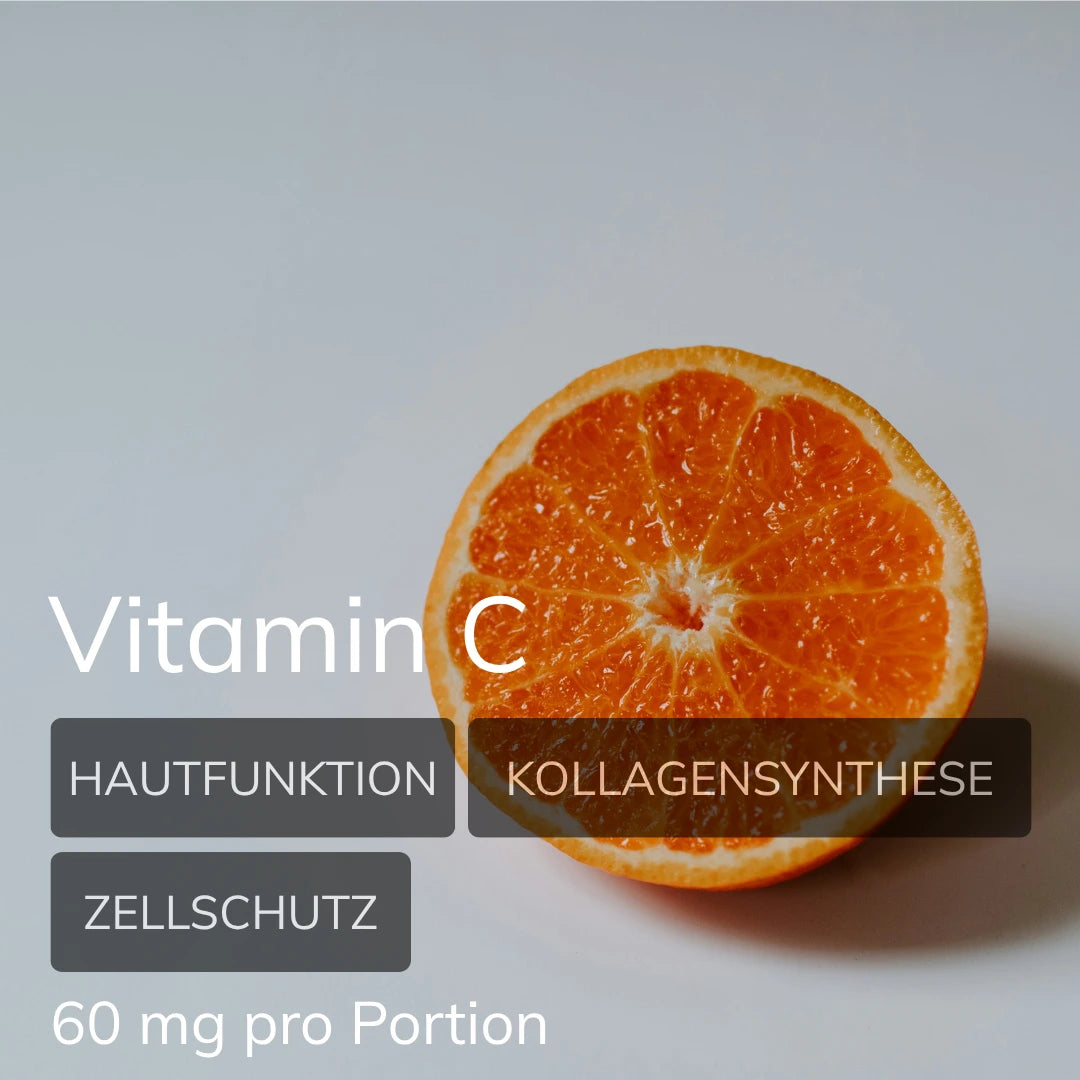
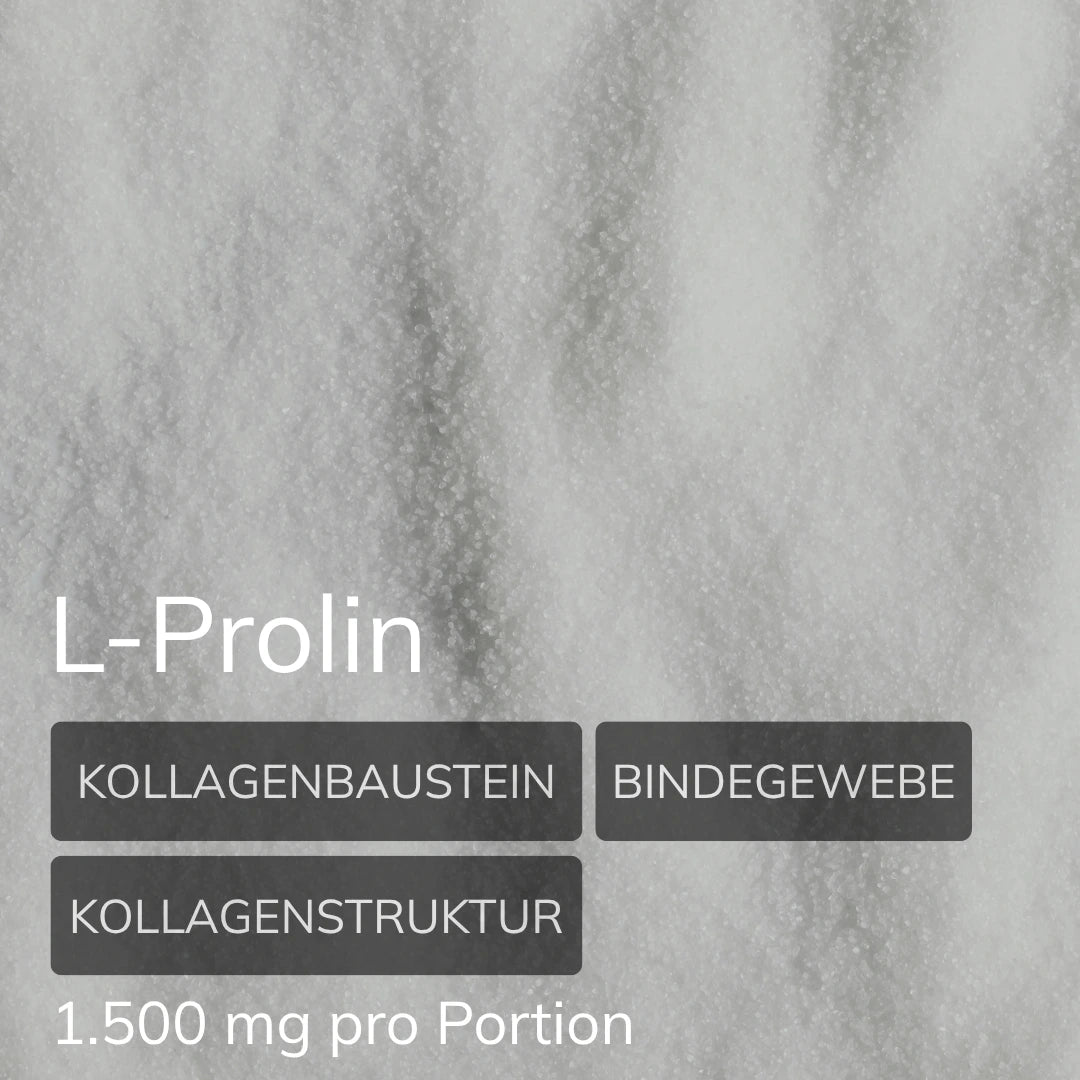
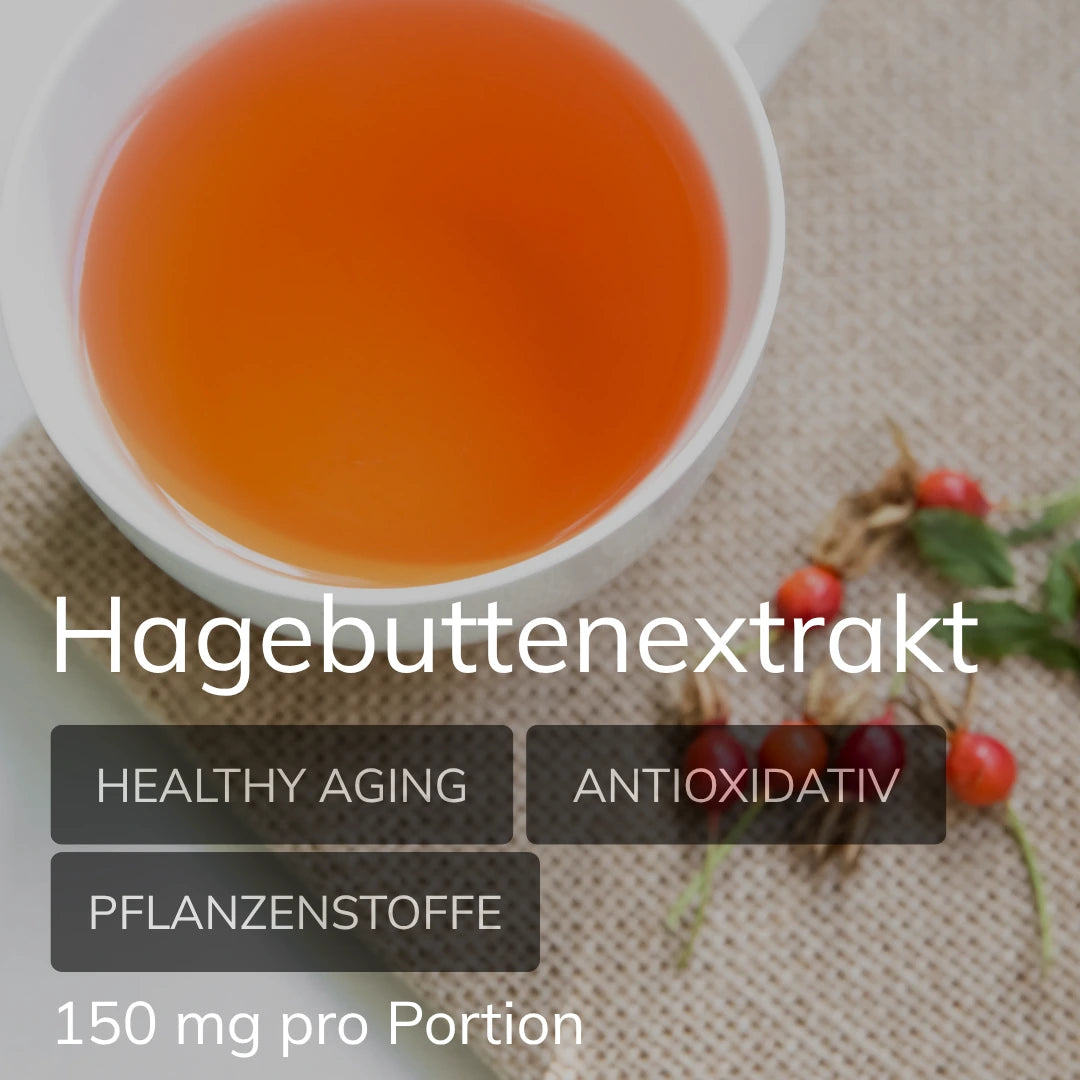
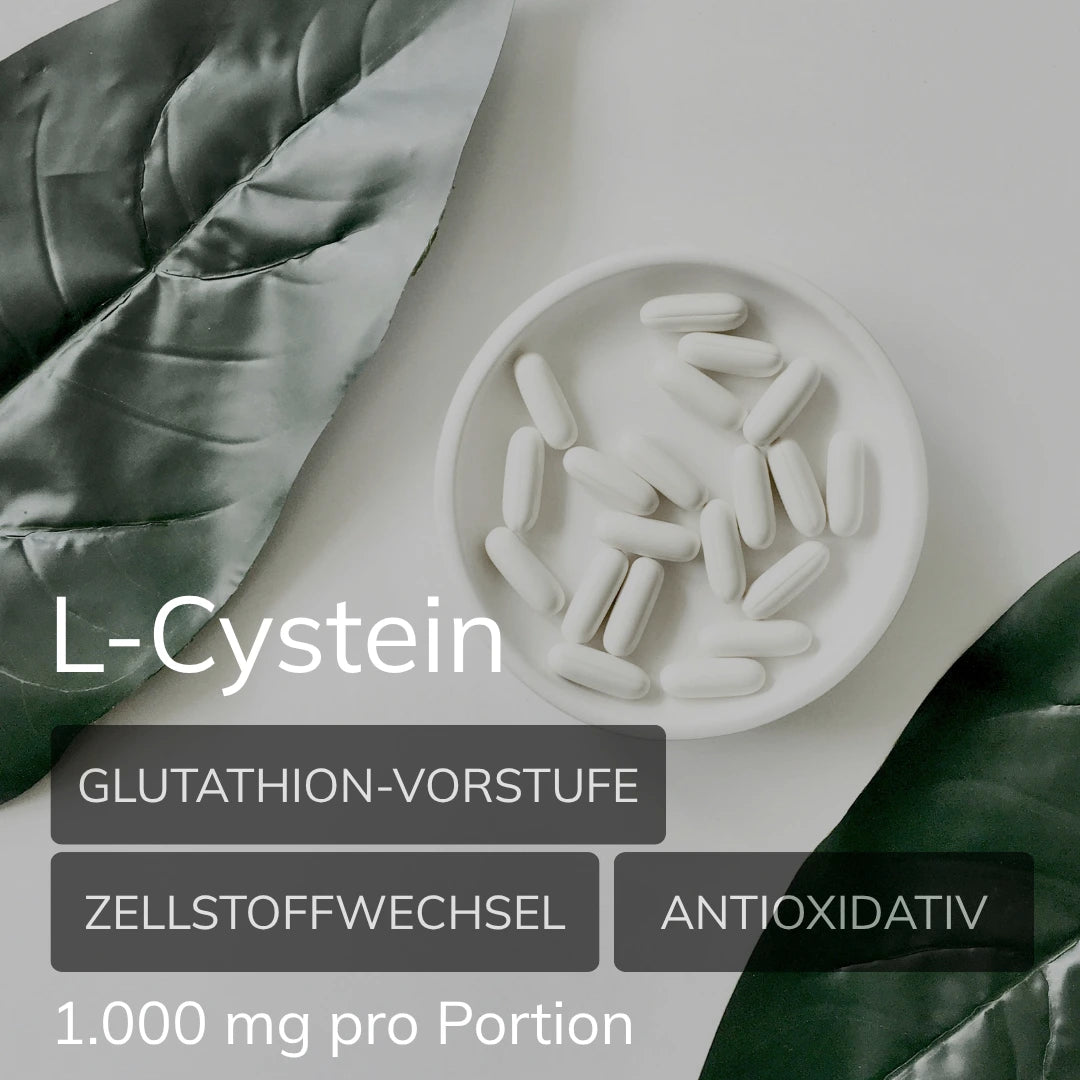
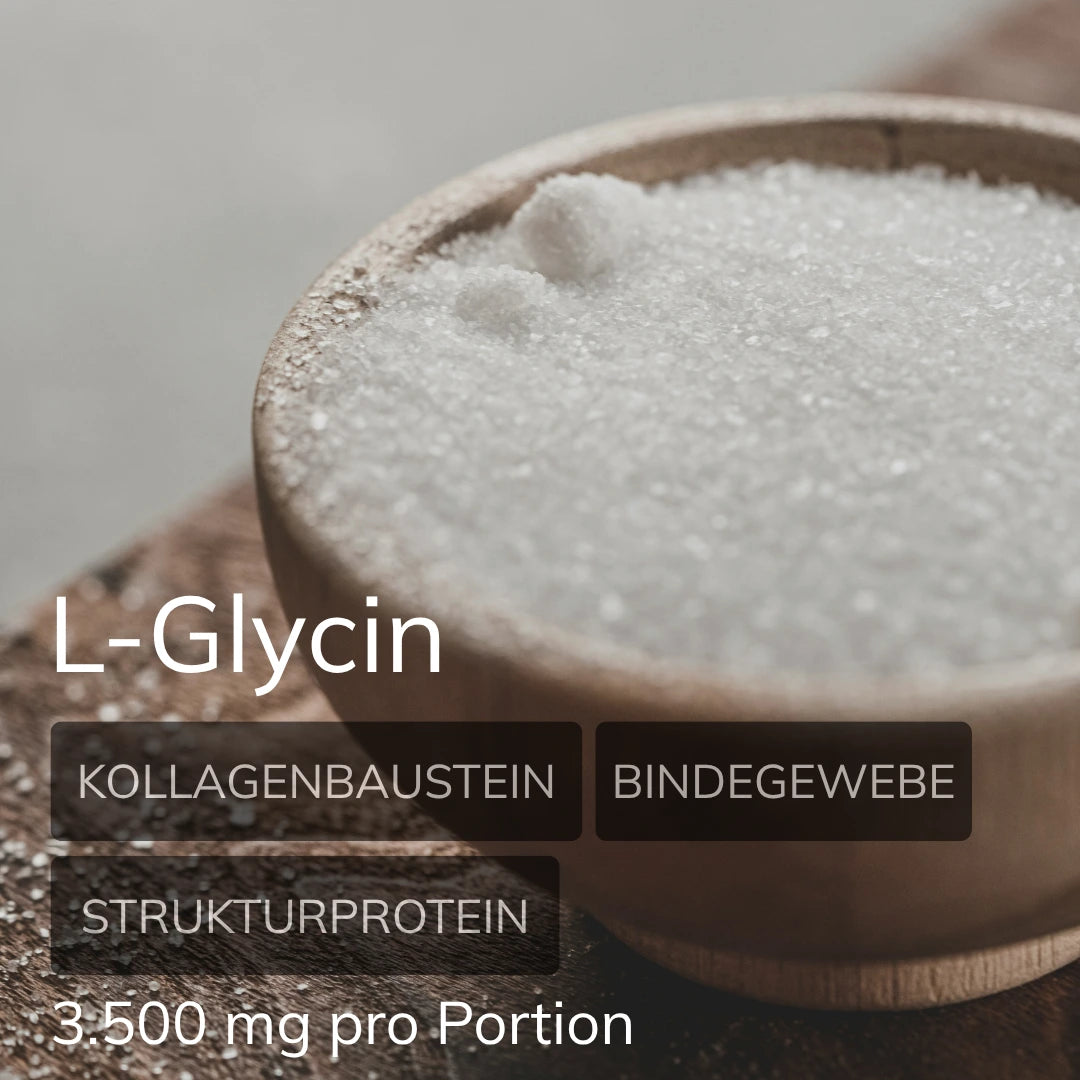
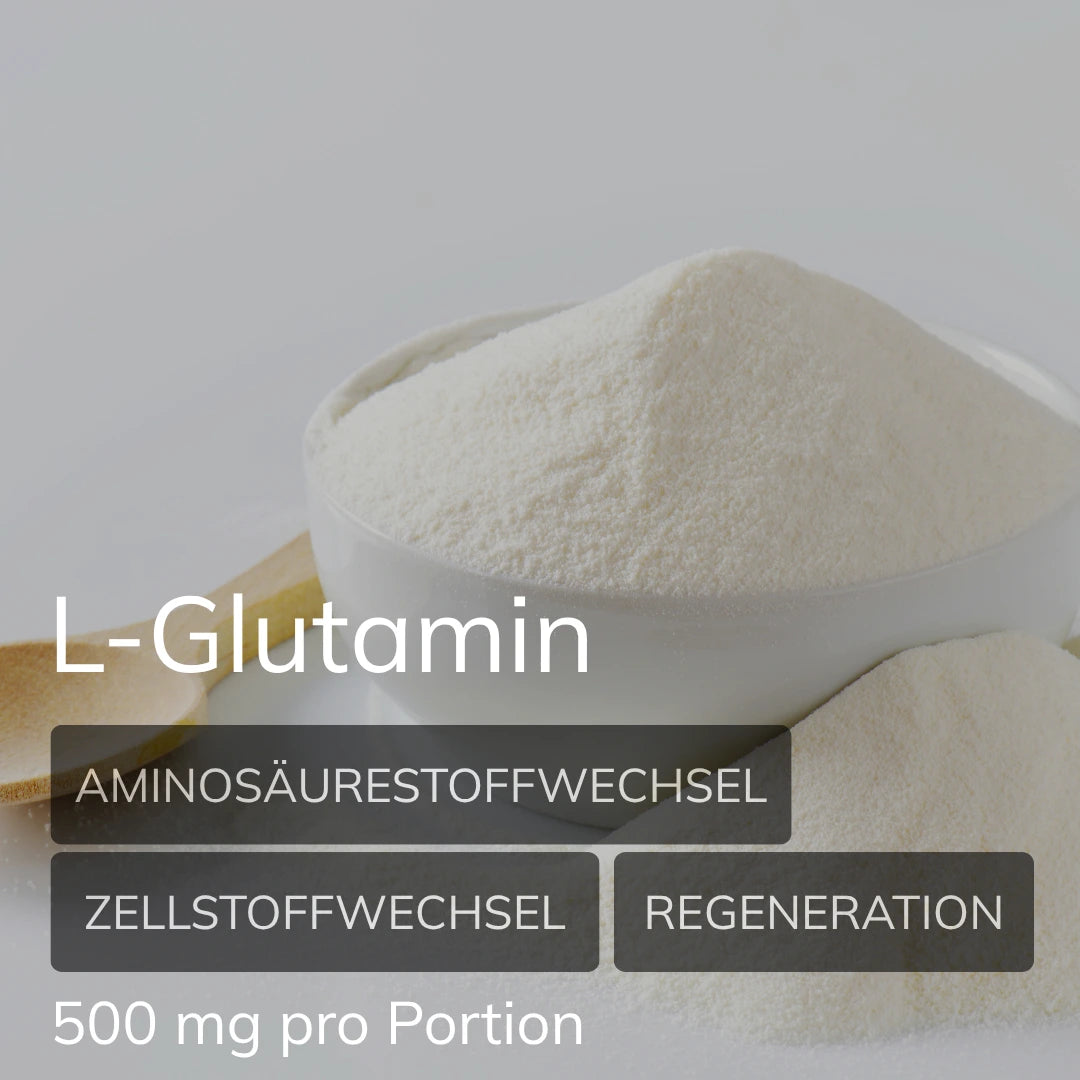
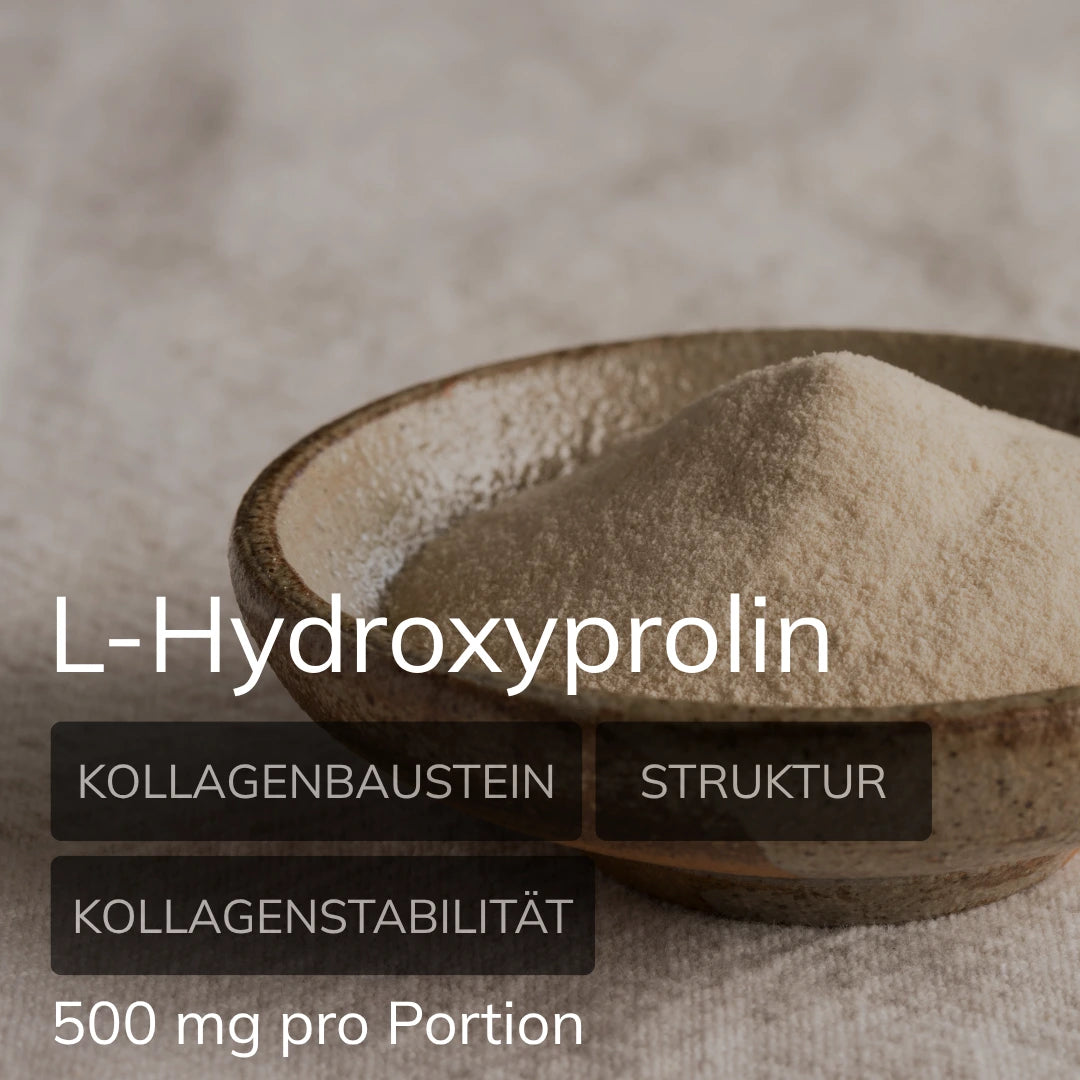
Inhaltsstoffe pro Tagesportion (12 g Pulver): Vitamin C (60 mg, 75 % NRV), L-Glycin (3.500 mg), L-Prolin (1.500 mg), L-Cystein (1.000 mg), L-Hydroxyprolin (500 mg), L-Glutamin (500 mg), Hagebuttenextrakt (150 mg), Maltodextrin, Vitamin C (Ascorbinsäure), Zitronensäure, Himbeeraroma, Süßungsmittel (Steviolglycoside, Sucralose, Acesulfam-K), Trennmittel (Siliciumdioxid).
Nährwerte pro Portion (12 g Pulver): Energie: 175 kJ / 42 kcal, Fett: 0 g, davon gesättigte Fettsäuren: 0 g, Kohlenhydrate: 3,5 g, davon Zucker: < 0,2 g, Eiweiß: 6,8 g, Salz: < 0,01 g, Vitamin C: 60 mg (75 % NRV).
Wissenschaft & Studien
Wissenschaft & Studien
In developing PreCollagen+, we drew on scientific findings about the amino acids, vitamin C, and plant compounds it contains.
Below is a selection of scientific publications addressing the individual ingredients and biological processes relevant to PreCollagen+.
Note: Unless explicitly stated otherwise, these are studies on individual ingredients or their biological functions, not clinical studies on the finished PreCollagen+ product.
01 — Collagen Formation & Structure
Chen et al., 2023
Research on collagen-related processes and the role of relevant amino acids.
Ingredients: Glycine · Proline · Hydroxyproline
[View study →]
Karna et al., 2020
Study of amino acids and processes associated with collagen synthesis.
Ingredients: Glycine · Proline · Hydroxyproline
[View study →]
Boyera & Bernard, 1998
Study of the effect of vitamin C on collagen-related processes in human skin fibroblasts.
Ingredient: Vitamin C
[View study →]
DePhillipo et al., 2018
Scientific study related to vitamin C and collagen-related structures.
Ingredient: Vitamin C
[View study →]
02 — Skin Elasticity & Hydration
Al-Atif, 2022
Scientific review of collagen and skin aging processes.
Relevant for: Glycine · Proline · Hydroxyproline
[View study →]
Proksch et al., 2013/2014
Human study on the oral intake of specific collagen peptides and the skin parameters examined.
Relevant for: Collagen/amino acid research
[View study →]
Phetcharat et al., 2015
Study of a rosehip preparation in relation to various skin parameters.
Ingredient: Rosehip extract
[View study →]
03 — Antioxidant Processes & Cell Protection
Ruiz-Ramirez et al., 2014
Studies on glycine in connection with oxidative and cellular processes.
Ingredient: Glycine
[View study →]
Oh et al., 2020
Scientific study of the antioxidant effects of vitamin C.
Ingredient: Vitamin C
[View study →]
Amirato et al., 2021
Studies on glutamine and cellular and antioxidant processes.
Ingredient: L-Glutamine
[View study →]
Rathbun et al., 1991
Research on cysteine in the context of the body's antioxidant mechanisms.
Ingredient: L-Cysteine
[View study →]
04 — Joints & Connective Tissue
Clark et al., 2008
Clinical study of collagen hydrolysate in physically active people with joint-related complaints.
Relevant to: collagen research
[View study →]
Bello & Oesser, 2006
Scientific review of collagen hydrolysate and joint health.
Relevant to: collagen research
[View study →]
Christensen et al., 2008
Study of rosehip powder in relation to joint parameters.
Ingredient: Rosehip
[View study →]
05 — Healthy Aging & longevity Research
Haus et al., 2007
Research on age-related changes in collagen and connective tissue structures.
Relevant to: Collagen & Aging
[View study →]
Bisset & Howlett, 2022
Scientific examination of glycine and metabolic processes in relation to aging.
Ingredient: Glycine
[View study →]
Rene et al., 2017
Research on glycine metabolism and its significance for muscle and metabolic processes.
Ingredient: Glycine
[View study →]
06 — Mitochondria & Energy Metabolism
Bannai et al., 2012
Studies on glycine and physiological metabolic processes.
Ingredient: Glycine
[View study →]
Kumar et al., 2023
Research on cysteine in relation to mitochondrial and cellular processes.
Ingredient: L-Cysteine
[View study →]
Versandkosten und Lieferinformationen
Versandkosten und Lieferinformationen
Preise, Versandkosten und Lieferinformationen
Die auf den Produktseiten angegebenen Preise enthalten die gesetzliche Mehrwertsteuer sowie alle sonstigen Preisbestandteile.
Wir liefern nach Deutschland, Österreich, in die Schweiz, nach Italien, Frankreich, Spanien, Belgien und in die Niederlande. Der Versand innerhalb Deutschlands ist kostenlos. Nach Österreich, in die Schweiz sowie in die übrigen genannten EU-Länder erfolgt der Versand ab einem Bestellwert von 50 € kostenfrei.
Der Versand aller physischen Produkte erfolgt über den Paketdienstleister DHL.
Für digitale Inhalte (z. B. E-Books, Software oder Downloads) fallen keine Versandkosten an.
Die Rolle von Kollagen beim Hautalterungsprozess
Kollagen ist eines der wichtigsten Strukturproteine unseres Körpers und ein wesentlicher Bestandteil unserer Haut. Es bildet dort ein stabiles Gerüst und trägt dazu bei, Festigkeit, Struktur und Elastizität zu erhalten.
Mit zunehmendem Alter verändert sich jedoch dieses Kollagengerüst: Die körpereigene Neubildung nimmt ab, während bestehende Kollagenstrukturen gleichzeitig stärker durch Faktoren wie UV-Strahlung und oxidativen Stress belastet werden können.
Das Ergebnis wird irgendwann sichtbar: Die Haut verliert zunehmend an Festigkeit und Elastizität, ihre Struktur verändert sich und typische Zeichen der Hautalterung können deutlicher hervortreten.
Genau deshalb sollte moderne Kollagenversorgung nicht erst beim fertigen Kollagen beginnen – sondern bei den Bausteinen und Prozessen, die der Körper für seine eigene Kollagenbildung benötigt.

Warum Kollagenpulver nicht einfach zu neuem Kollagen in der Haut wird
Warum Kollagenpulver nicht einfach zu neuem Kollagen in der Haut wird
Kollagen, das wir über die Nahrung oder ein Supplement aufnehmen, kann vom Körper nicht einfach als fertiges Hautkollagen übernommen werden.
Während der Verdauung werden Kollagenproteine beziehungsweise Kollagenpeptide weiter in kleinere Peptide und Aminosäuren zerlegt. Erst diese Bestandteile können aufgenommen und anschließend vom Körper für unterschiedliche Prozesse verwendet werden.
Genau hier setzt ein anderer Ansatz an: Statt große Mengen tierischen Kollagens zuzuführen, kann man dem Körper gezielt charakteristische Bausteine der Kollagenstruktur zur Verfügung stellen.
Why PreCollagen+ contains no collagen - and why that’s exactly what sets it apart
Why PreCollagen+ contains no collagen - and why that’s exactly what sets it apart
PreCollagen+ deliberately contains no animal collagen.
Instead, the formula provides the free amino acids L-Glycine, L-Proline and L-Hydroxyproline – characteristic building blocks of collagen structure.
It also contains Vitamin C, which plays a special role: Vitamin C has been shown to contribute to normal collagen formation for the normal function of the skin.
That’s why PreCollagen+ takes an approach that doesn’t say:
“We give your body ready-made collagen.”
Instead:
“We provide it with carefully selected building blocks and an important cofactor for its own collagen formation.”
This core formula is complemented by L-Glutamine, L-Cysteine and rosehip extract to create a more comprehensive formula.
Was die Wissenschaft über diesen Ansatz sagt
Was die Wissenschaft über diesen Ansatz sagt
The idea behind PreCollagen+ is based on more than just a beauty trend. Glycine, proline, and hydroxyproline, and their significance for collagen structure and metabolism, are the subject of scientific research.
Targeted combinations of characteristic collagen amino acids are also now being studied for their effects on collagen-related processes and skin parameters.
At PreCollagen+, we combine this approach with vitamin C – a micronutrient whose contribution to normal collagen formation is scientifically recognized and approved as a health claim in the EU.
Warum wir Kollagen nicht nur als Beauty-Thema betrachten
Warum wir Kollagen nicht nur als Beauty-Thema betrachten
Collagen is not relevant only to the skin. It is one of the most important structural proteins in the human body and is found in, among other places, the skin, bones, cartilage, tendons, and connective tissue.
That’s why we didn’t develop PreCollagen+ as a classic beauty drink, but with a healthy aging and longevity perspective.
The skin is the most visible part of a much larger biological process: maintaining and continuously renewing our structural tissues.
PreCollagen+ focuses precisely on the building blocks of these structures.

Endlich Kollagen, das wirkt!
PreCollagen+ provides your body with the specific amino acids it needs to produce its own collagen, complemented by vitamin C as an essential cofactor.
The smarter way to boost collagen.
✔ Activates the body's own collagen synthesis
✔ With 3 key amino acids
✔ Vegan & GMO-free
✔ Lab-tested – Made in Germany
Nicht einfach Kollagen. Sondern gezielt die Bausteine dahinter.
PreCollagen+ takes a different approach from traditional collagen powder: instead of providing animal-derived collagen, the formula focuses on carefully selected free amino acids that are characteristic building blocks of collagen structure.
The focus is on glycine, proline, and hydroxyproline. Together, they provide 5.5 g of key amino acids per serving and are combined with vitamin C, which contributes to normal collagen formation for the normal function of the skin.

GLYCIN
GLYCIN
The most abundant building block of collagen structure
Glycine is especially characteristic of collagen: About every third amino acid in the collagen structure is glycine. Its small molecular structure allows the three collagen chains to pack particularly closely together, forming the characteristic stable triple helix.
PreCollagen+ provides glycine directly as a free amino acid.
PROLIN
PROLIN
Ein charakteristischer Bestandteil stabiler Kollagenstrukturen
Prolin kommt besonders häufig in Kollagen vor und spielt gemeinsam mit Glycin und Hydroxyprolin eine wichtige strukturelle Rolle.
Es ist damit nicht einfach irgendeine Aminosäure, sondern einer der charakteristischen Bausteine, aus denen der Körper Kollagenstrukturen zusammensetzt.
HYDROXYPROLIN
HYDROXYPROLIN
Particularly characteristic of collagen
Hydroxyproline is closely associated with collagen and contributes significantly to the stability of collagen’s characteristic triple helix.
That’s exactly why PreCollagen+ specifically combines hydroxyproline with glycine and proline—instead of focusing solely on a high amount of nonspecific protein.
VITAMIN C
VITAMIN C
The cofactor for the body’s own collagen production
Building blocks alone aren’t the whole story. The body also needs vitamin C to form stable collagen structures.
That’s why PreCollagen+ combines the three characteristic collagen building blocks with vitamin C.
And here you have a particularly strong, officially approved benefit:
Vitamin C contributes to normal collagen formation for the normal function of the skin.
Deine Haut. Woche für Woche.
Kollagen entsteht nicht über Nacht. PreCollagen+ versorgt deinen Körper täglich mit den zentralen Kollagen-Bausteinen Glycin, Prolin und Hydroxyprolin. Bei konsequenter Anwendung kann sich deine Beauty-Routine von innen Schritt für Schritt bemerkbar machen.
Das sagen unsere Kunden
Miriam M.
I've been taking PreCollagen+ for a few weeks now, and I'm really impressed. My skin feels smoother and somehow plumper and looks fresher in the morning. I especially like that I don't have to take animal-derived collagen.
The wild berry flavor is pleasantly subtle, and the drink has simply become part of my daily routine.

Sven T.
I was always a little skeptical about collagen products. PreCollagen+’s approach, using targeted collagen building blocks instead of classic collagen powder, won me over.
After a few weeks, I mainly feel that my skin looks more cared for and firmer overall. For me, it’s a really well-thought-out addition to my longevity routine.
Annalena K.
Finally, a supplement I actually enjoy drinking every day! Wildberry tastes fresh and not at all artificial or overly sweet. After taking it regularly, I find that my complexion looks more even and refreshed.
My nails also feel stronger now. PreCollagen+ is definitely staying in my morning routine!
Maria A.
My wife introduced me to PreCollagen+, and now I take it every day myself. What I like: no animal collagen and no huge amounts of powder, just a sensible approach using amino acids and vitamin C.
After a few weeks, my skin looks fresher and less dry to me. The taste and ease of use are great - I’d buy it again.

5.000+ zufriedene Kunden
Mehr als 5000 Kunden sind mit unseren Produkten zufrieden. Jetzt bist du an der Reihe!

50.000+ ausgelieferte Bestellungen
In Zusammenarbeit mit unserem Partner DHL haben wir bereits 50.000+ Bestellungen zugestellt.

2.500+ verifizierte Bewertungen
Bereits 500+ Kunden haben uns bewertet mit einem Durchschnitt von 4.9 von 5 Sternen.
So simpel...

01
Einen Löffel in 300ml Wasser füllen

02
Gut schütteln!

03
Erlebe deinen Glow-Up!

Du bist schon länger bei beLIVELY?
Dann teste jetzt dein biologisches Alter und entdecke, wie stark du deine Jugendlichkeit zurückgewonnen hast!
Alle Inhaltsstoffe
Hast Du Fragen an uns?
What exactly is PreCollagen+?
What exactly is PreCollagen+?
PreCollagen+ is a vegan alternative to traditional collagen products. Instead of animal-derived collagen, it contains selected free amino acids—including glycine, proline, and hydroxyproline—as well as vitamin C, cysteine, glutamine, and rosehip extract.
Some studies suggest that the targeted combination of these three amino acids may support the body's own collagen production up to four times more effectively than conventional collagen products.
Does PreCollagen+ contain any collagen at all?
Does PreCollagen+ contain any collagen at all?
No—and that’s exactly what makes the difference.
PreCollagen+ contains no animal collagen. Instead, the formula provides carefully selected free amino acids such as glycine, L-proline, and L-hydroxyproline—characteristic building blocks of collagen structure. These are complemented by vitamin C, which has been shown to contribute to normal collagen formation for the normal function of the skin.
The idea is simple: classic collagen powder consists of large collagen proteins or—if the collagen is hydrolyzed—smaller collagen peptides. The body cannot simply use these as ready-made collagen; during digestion, they first have to be broken down further into smaller peptides and amino acids.
That’s why PreCollagen+ starts one step earlier: Instead of supplying ready-made animal collagen, it provides targeted free amino acids that the body can use as building blocks for its own collagen synthesis.
This “PreCollagen” approach is also being scientifically studied. Studies on targeted collagen amino acid compositions offer promising indications that directly providing characteristic collagen building blocks may be an efficient way to support collagen-related processes.
In short: We don’t simply give your body ready-made collagen—we provide carefully selected building blocks and vitamin C that it can use for its own collagen formation.
Warum sind Glycin, Prolin und Hydroxyprolin enthalten?
Warum sind Glycin, Prolin und Hydroxyprolin enthalten?
Glycine, proline, and hydroxyproline are characteristic amino acids in collagen structure.
That’s why these three amino acids are at the heart of the PreCollagen+ formula.
A study (https://www.nature.com/articles/s41514-025-00280-7) also showed that this combination of amino acids can be up to four times more effective than conventional collagen.
Why does PreCollagen+ contain vitamin C?
Why does PreCollagen+ contain vitamin C?
Vitamin C contributes to normal collagen formation for the normal function of the skin. One serving of PreCollagen+ contains 50 mg of vitamin C, which is 62.5% of the daily reference value.
Is PreCollagen+ vegan?
Is PreCollagen+ vegan?
Yes. PreCollagen+ contains no animal-derived collagen and is vegan.
How do I take PreCollagen+?
How do I take PreCollagen+?
Täglich 1 Dosierlöffel (12 g) in 300 ml Wasser auflösen und trinken.
Wir empfehlen die Einnahme am Abend, da auch der Kollagenstoffwechsel circadianen Rhythmen folgt.
Entscheidend ist jedoch vor allem die regelmäßige tägliche Einnahme.
Kann ich es mit anderen Supplements kombinieren?
Kann ich es mit anderen Supplements kombinieren?
PreCollagen+ can be ideally combined with our NMN – NAD+ Booster and beLIVELY Vita. Together, the three products form a comprehensive longevity routine that specifically addresses different areas: from supporting the body’s own collagen production and NAD+ metabolism to providing selected vitamins and micronutrients every day.
Three formulas. Three targeted approaches. One holistic longevity routine for every day.
Wissenschaft und Studien
Wissenschaft und Studien
In developing PreCollagen+, we drew on scientific findings about the amino acids, vitamin C, and plant compounds it contains.
Below is a selection of scientific publications addressing the individual ingredients and biological processes relevant to PreCollagen+.
Note: Unless explicitly stated otherwise, these are studies on individual ingredients or their biological functions, not clinical studies on the finished PreCollagen+ product.
01 — Collagen Formation & Structure
Chen et al., 2023
Research on collagen-related processes and the role of relevant amino acids.
Ingredients: Glycine · Proline · Hydroxyproline
[View study →]
Karna et al., 2020
Study of amino acids and processes associated with collagen synthesis.
Ingredients: Glycine · Proline · Hydroxyproline
[View study →]
Boyera & Bernard, 1998
Study of the effect of vitamin C on collagen-related processes in human skin fibroblasts.
Ingredient: Vitamin C
[View study →]
DePhillipo et al., 2018
Scientific study related to vitamin C and collagen-related structures.
Ingredient: Vitamin C
[View study →]
02 — Skin Elasticity & Hydration
Al-Atif, 2022
Scientific review of collagen and skin aging processes.
Relevant for: Glycine · Proline · Hydroxyproline
[View study →]
Proksch et al., 2013/2014
Human study on the oral intake of specific collagen peptides and the skin parameters examined.
Relevant for: Collagen/amino acid research
[View study →]
Phetcharat et al., 2015
Study of a rosehip preparation in relation to various skin parameters.
Ingredient: Rosehip extract
[View study →]
03 — Antioxidant Processes & Cell Protection
Ruiz-Ramirez et al., 2014
Studies on glycine in connection with oxidative and cellular processes.
Ingredient: Glycine
[View study →]
Oh et al., 2020
Scientific study of the antioxidant effects of vitamin C.
Ingredient: Vitamin C
[View study →]
Amirato et al., 2021
Studies on glutamine and cellular and antioxidant processes.
Ingredient: L-Glutamine
[View study →]
Rathbun et al., 1991
Research on cysteine in the context of the body's antioxidant mechanisms.
Ingredient: L-Cysteine
[View study →]
04 — Joints & Connective Tissue
Clark et al., 2008
Clinical study of collagen hydrolysate in physically active people with joint-related complaints.
Relevant to: collagen research
[View study →]
Bello & Oesser, 2006
Scientific review of collagen hydrolysate and joint health.
Relevant to: collagen research
[View study →]
Christensen et al., 2008
Study of rosehip powder in relation to joint parameters.
Ingredient: Rosehip
[View study →]
05 — Healthy Aging & longevity Research
Haus et al., 2007
Research on age-related changes in collagen and connective tissue structures.
Relevant to: Collagen & Aging
[View study →]
Bisset & Howlett, 2022
Scientific examination of glycine and metabolic processes in relation to aging.
Ingredient: Glycine
[View study →]
Rene et al., 2017
Research on glycine metabolism and its significance for muscle and metabolic processes.
Ingredient: Glycine
[View study →]
06 — Mitochondria & Energy Metabolism
Bannai et al., 2012
Studies on glycine and physiological metabolic processes.
Ingredient: Glycine
[View study →]
Kumar et al., 2023
Research on cysteine in relation to mitochondrial and cellular processes.
Ingredient: L-Cysteine
[View study →]